




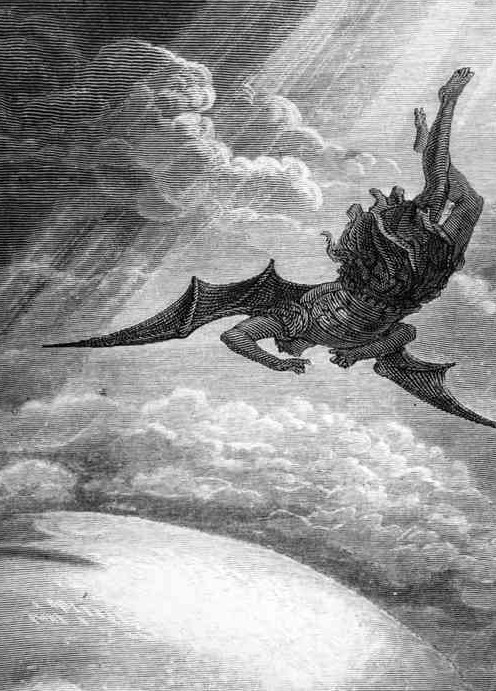
Christians teach that God is humanity’s perfectly good and loving Creator. But if that’s true, where did evil come from? Why does suffering persist? Did God actually create sin?
These are ancient questions that still plague many believers—even though the Bible offers answers. God’s Word assures us that evil is not an eternal force existing alongside God. Rather, Scripture consistently portrays God as the Creator of everything that was originally “very good” (Genesis 1:31). Evil enters the biblical narrative as a rebellion arising within created freedom, not as a substance created by God.
Bible scholars often associate this rebellion with the fall of Lucifer, a fascinating story described in Scripture that reveals not only where evil comes from but also how God responds to it.
Key Passages in the Bible About Where Evil Comes From
Four chapters in the Bible deal heavily with the origin of evil:
- Genesis 1–3
- Isaiah 14
- Ezekiel 28
- Revelation 12
Many denominations within Christianity use these passages to answer where evil comes from, yet they sometimes differ in their interpretations of the details. This article will survey the contents of these chapters and how they have been interpreted by:
- Roman Catholic tradition
- Eastern Orthodox tradition
- General Protestant tradition
- Seventh-day Adventist tradition, including the writings of church co-founder Ellen G. White
White is a widely published Christian author who often wrote about the “great controversy,” the cosmic battle between good and evil that began with Lucifer’s rebellion in heaven and consequent fall. Her writings on the four Bible passages mentioned above and her powerful descriptions of the great controversy metanarrative have heavily shaped Seventh-day Adventism’s approach to faith and beliefs on Satan.
Genesis 1–3: Creation Declared Good, Satan Brings Evil
In Genesis 1, God repeatedly declares that His creation of Earth is “good.” In fact, the chapter concludes with:
“Then God saw everything that He had made, and indeed it was very good.”
But then, in Genesis 3, the fallen angel Lucifer (now Satan) appears as a serpent to Eve and tricks her into disobeying God’s command. Adam soon followed. This is when humanity accepted sin. Evil did not come from God; it came from Satan and manifested through choice.
Comparing Different Denominational Views on Genesis 1–3
Historically, nearly all orthodox Christian traditions have understood this passage to indicate that evil was not part of God’s original creation.
- Roman Catholic View
Following Augustine of Hippo and Thomas Aquinas, Catholic theology teaches that evil is a privation (absence) of good rather than a created thing.
- Eastern Orthodox View
Following John of Damascus, Eastern Orthodox theologians similarly argue that evil has no independent existence; it represents the corruption of what God originally made good.
- General Protestant View
Reformation writers such as John Calvin and Martin Luther likewise rejected the notion that God created evil, instead arguing that evil came from the rebellion of created beings.
- Seventh-day Adventist View
Adventist theology agrees that God did not create evil (note that the Seventh-day Adventist Church is Protestant), but Adventist beliefs place particular emphasis on humanity’s freedom of conscience and the ongoing battle between Christ and Satan (famously termed the “great controversy” by Ellen G. White).
Isaiah 14: Fall of the Human King of Babylon or Lucifer?
Isaiah 14 begins by addressing the fall of the king of Babylon, but in verse 12, it transitions to another subject:
“How you are fallen from heaven, O Lucifer, son of the morning!”
Most biblical scholars agree that Isaiah was directly speaking against the Babylonian monarch. However, many Christians—from the early church onward—have also viewed this passage as a typological description of Satan’s original rebellion in heaven and consequent fall. Their view is largely based on the following key expressions found in verses 13 and 14:
- “I will ascend into heaven.”
- “I will exalt my throne.”
- “I will also sit on the mount.”
- “I will ascend above the heights of the clouds.”
- “I will be like the Most High.”
These five “I will” statements reveal extraordinary pride.
Comparing Different Denominational Views on Isaiah 14
- Roman Catholic View
The Catechism of the Catholic Church does not rely upon Isaiah 14 to describe Lucifer’s fall, but the Church follows the longstanding Christian tradition of recognizing a secondary reference to the devil in this chapter.
- Eastern Orthodox View
Orthodox commentators have historically interpreted Isaiah 14 in connection with the fall of Lucifer/Satan, while also recognizing the passage’s immediate reference to an earthly ruler.
- General Protestant View
Many Protestant commentators understand this passage typologically, but some modern scholars interpret it as exclusively royal satire.
- Seventh-day Adventist View
Adventist scholars have historically interpreted Isaiah 14 as having both an immediate historical fulfillment and a larger cosmic application describing the fall of Lucifer/Satan.
Ellen G. White’s Interpretation of Isaiah 14
In her book Patriarchs and Prophets, Ellen G. White describes Lucifer as occupying the highest position among the angels before pride entered his heart. Rather than portraying rebellion as immediate, she emphasizes its gradual development, arguing that the fallen angels’ dissatisfaction with God’s government spread through quiet suggestion rather than open revolt. This narrative resonates with the biblical principle that pride precedes destruction (Proverbs 16:18).
Where did evil come from? The best one-word answer might very well be “pride.”
For deeper insight in White’s interpretation, consult Patriarchs and Prophets, chapters “Why Was Sin Permitted?” and “The Creation.”
Ezekiel 28: Describing the Human King of Tyre or Lucifer?
Like Isaiah 14, Ezekiel 28 directly addresses an earthly ruler, beginning with the Lord’s message to the “prince of Tyre.” Later, the chapter switches to addressing the “king of Tyre,” and the description it presents exceeds that of any ordinary human king:
- “You were in Eden” (verse 13)
- “You were the anointed cherub” (verse 14)
- “You were perfect in your ways” (verse 15)
These statements have led many Christian interpreters to argue a dual application.
Comparing Different Denominational Views on Ezekiel 28
- Roman Catholic View
Catholic scholars often interpret the passage historically while acknowledging a traditional application to Satan.
- Eastern Orthodox View
Orthodox writers recognize the passage’s historical application while emphasizing the chapter’s symbolic theology.
- General Protestant View
Protestant commentators are divided in their interpretations. Some understand the passage as primarily referring to the historical king of Tyre, while others see its imagery as extending beyond him to Satan and the great controversy.
- Seventh-day Adventist View
Adventist scholars recognize the chapter’s historical setting but strongly identify the “anointed cherub” as Lucifer before his fall.
Ellen G. White’s Interpretation of Ezekiel 28
In Patriarchs and Prophets, White frequently combines Isaiah 14 and Ezekiel 28 to paint a detailed portrait of Lucifer in his role in the great controversy.
She emphasizes these characteristics of Lucifer before and leading up to his fall:
- Extraordinary beauty
- Wisdom
- Musical gifts
- Nearness to God’s throne
- Gradual self-exaltation
White presents rebellion as the inevitable consequence of cherished pride and the deliberate rejection of God’s statutes.
Revelation 12: A Clear Reference to Lucifer’s Fall From Heaven
Unlike Isaiah and Ezekiel, Revelation 12 explicitly identifies its subject, the dragon, as:
“That serpent of old, called the Devil and Satan, who deceives the whole world” (verse 9).
That is why this chapter serves as one of the strongest biblical foundations for the doctrine of a pre-earthly rebellion. This story’s major plot points and characters include:
- War in heaven
- Michael
- The dragon
- Fallen angels
- The casting down of Satan
- The blood of the Lamb
Different Denominations Mostly Agree
Virtually every major Christian tradition identifies the dragon as Satan. However, differences in interpretation arise concerning chronology.
Some interpret the war symbolically. Others connect it with Christ’s victory at the cross. Seventh-day Adventists generally understand Revelation 12 to encompass multiple stages of the great controversy:
- Lucifer’s original rebellion in heaven
- Christ’s victory on the cross
- The continuing conflict
- The final judgment
What Ellen G. White’s Writings on the Great Controversy Tell Us About the Origin of Evil
Ellen G. White’s writings frame the story of redemption as so much more than our way to salvation. She unpacks the entire story of Scripture to demonstrate God’s consistent character of love throughout the great controversy, even when evil appeared.
Repeatedly, she argues:
- God’s government is founded upon true love.
- True love requires freedom.
- Freedom allows genuine choice.
- Choice permits rebellion.
- Rebellion necessitates redemption.
- Christ’s life and death revealed God’s true character to the universe.
- The cross answered Satan’s accusations against God and allowed us to choose redemption.
This framework permeates White’s most famous books, including Patriarchs and Prophets, The Desire of Ages, and The Great Controversy.
Scholarly Observations on White’s ‘Great Controversy’
Many historians note that Ellen G. White’s “great controversy” motif differs from classical Augustinian theology by placing greater emphasis on cosmic conflict rather than inherited guilt. Modern Adventist scholars—including Richard Davidson, Ángel Manuel Rodríguez, Gerhard Pfandl, and Jiří Moskala—have explored her biblical metanarrative extensively. Outside Adventism, scholars such as Gregory Boyd have similarly emphasized the “warfare worldview,” though with different theological conclusions.
Studying the Bible With the Great Controversy in Mind
Scripture tells us that Lucifer wanted to be equal with God, and his pride ultimately led to his fall and the fall of one-third of the angels. In Genesis 3, we see this conflict move from heaven to earth; we witness where evil comes from. The serpent’s question, “Has God indeed said . . . ?” becomes the first recorded challenge to divine revelation.
How does humanity respond to that question? How does God redeem His beloved creation? Read the rest of Scripture—asking yourself along the way if you will choose to trust God’s Word or allow another voice to redefine truth.
God grants you that choice because He truly loves you, and if you choose to have a relationship with Him, to follow His statutes because you love Him, evil will flee from you!
“Therefore submit to God. Resist the devil and he will flee from you. Draw near to God and He will draw near to you. Cleanse your hands, you sinners; and purify your hearts, you double-minded. Lament and mourn and weep! Let your laughter be turned to mourning and your joy to gloom. Humble yourselves in the sight of the Lord, and He will lift you up.” (James 4:7–10)
Related Articles:
The Devil Is Defeated: Christ’s Victory Over Satan
The Origin of Evil and Deception
Christ’s Sacrifice: The Heart of Redemption in a Nutshell
To learn more about the great controversy, check out our Bible study resources!
Scripture quotations are taken from the New King James Version®. Copyright © 1982 by Thomas Nelson. Used by permission. All rights reserved.
Article
Stop in the Name of God: Remembering THE Seventh Day Sabbath
Stop in the Name of God: Remembering THE Seventh Day Sabbath Friends we are living in an age of exhaustion. Not just physical exhaustion — spiritual...
Stop in the Name of God: Remembering THE Seventh Day Sabbath Friends we are living in an age of exhaustion....