
Theology & Doctrine
-
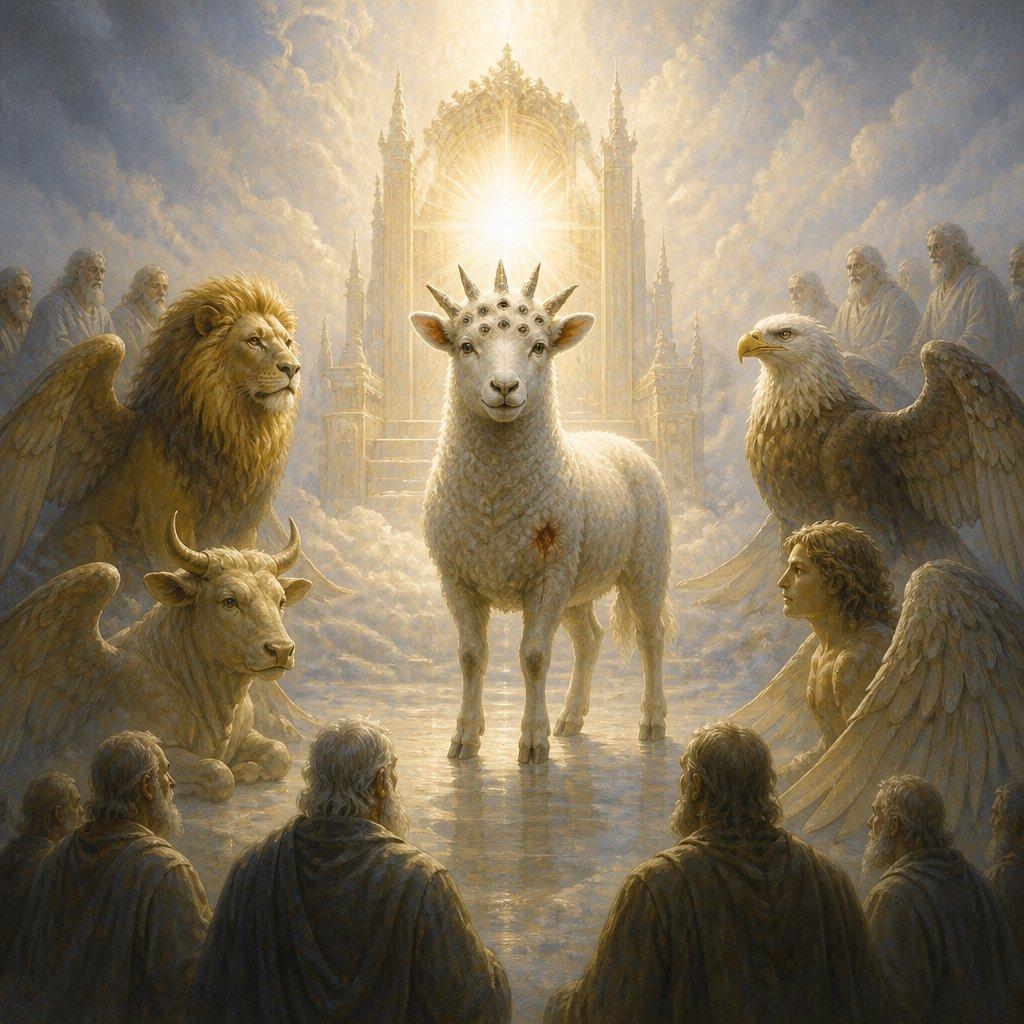
Unveiling Revelation 5: The Lamb, the Sealed Scroll, and the Triumph of Christ
A verse-by-verse, Christ-centered study. Revelation 5 is one of the most important Christological chapters in the entire Bible. It reveals why Jesus Christ alone is worthy to open the sealed scroll, how His death and resurrection secured the victory in the great controversy, and why all heaven acknowledges His authority to carry out God’s purposes…
-

Loyalty to Christ’s Church Versus Loyalty to Church Administration
Can a Seventh-day Adventist remain faithful to the church while conscientiously directing tithe to gospel workers outside the conference system? Yes, there is a serious biblical and Ellen G. White-based argument that a person can remain spiritually faithful to the Seventh-day Adventist Church while disagreeing with its administration and, in exceptional circumstances, supporting legitimate gospel…
-
Can the Seventh-day Adventist Church Claim Exclusive Authority Over Tithe as a Test of Loyalty?
A biblical, Ellen G. White, and Conrad Vine examination of divine authority, Christian conscience, and denominational governance An organized church may legitimately establish a common system for receiving and distributing tithe and may expect its members and leaders to respect that system. However, it cannot demonstrate from an explicit biblical command that loyalty to Jesus…
-

A Igreja Remanescente
Explore the “remnant church” and its unique role in illuminating a world shrouded in darkness. This book dives into the significance of God’s people as beacons of light, revealing their identity, organization, and mission in the midst of challenging times.
-
Avoiding Difficult Biblical Truths May Attract Larger Audiences
Biblical, Theological, and Sociological Analysis Using Barna Research and Church Growth Studies Central thesis: Churches that minimize or avoid biblical teachings about hell, sin, the exclusivity of Jesus Christ, the authority of Scripture, repentance, biblical marriage, the cost of discipleship, and the Second Coming may find it easier to attract and retain certain audiences. These…
-

Spiritual Prostitution of the Churches with Political Powers in Revelation 17
A biblical and historicist Seventh-day Adventist study drawing on Alberto R. Treiyer and Ellen G. White 1. What does spiritual prostitution mean in Revelation 17? Revelation 17 describes one of the most significant prophetic developments preceding the second coming of Jesus Christ: a religious system that abandons its spiritual fidelity to Christ and enters into…
-

Evidence is Not the Issue (Part 1) | Realigion (Part 7) | David Asscherick
Christian apologetics goes beyond simply winning arguments to offering a rational defense of the faith. Effective defense requires both being informed with facts and being infilled with the Holy Spirit. Biblical examples like Pharaoh and the Pharisees reveal that visual evidence alone rarely changes a hardened heart. A true defense combines an accurate message with…
-
Truth and Evidence | Realigion (Part 6) | David Asscherick
What does it mean for Christianity to be true? In this class on apologetics, truth is defined as that which corresponds with reality. David Asscherick explores the distinction between objective and subjective truth, affirming that scripture claims to be objectively true. By examining foundational questions of origin, meaning, morality, and destiny, it becomes clear why…
-
The “Friend” Argument | Realigion (Part 5) | David Asscherick
Christianity is more than a set of rational arguments because it invites believers into a personal experience with God. The Holy Spirit provides an internal witness that confirms our faith and identity as children of God. Historical evidence like the resurrection provides a strong foundation for belief but true knowledge comes from a deeply personal…
-
Biblical Morality | Realigion (Part 4) | David Asscherick
Moral relativism fails by reducing right and wrong to mere cultural preferences. A transcendent anchor is necessary for true moral absolutes to exist. God provides the perfect standard of love and the moral authority to enforce it. Scripture reveals a just Creator who constantly pursues humanity while honoring human freedom and ensuring complete justice.
-
The “Ought” Argument (Part 2) | Realigion (Part 3) | David Asscherick
God gives negative boundaries in the law and positive moral examples through the life of Jesus. Materialism fails to explain human ethics because mere matter cannot hold moral value. Shared global values show that morality is not arbitrary like human language. These transcultural moral consistencies point to an objective moral standard rooted in humanity being…
-
The “Ought” Argument (Part 1) | Realigion (Part 3) | David Asscherick
Objective morality points directly to a transcendent Creator. Materialism fails to provide a foundation for absolute moral values, leaving only cultural or personal preference. True morality must be anchored in the loving and just character of God. The biblical framework presents Godly boundaries through the law and positive moral examples through the life of Jesus…
-
More than Matter (Part 2) | Realigion (Part 2) | David Asscherick
Materialism claims the human mind is merely an emergent property of physical brain cells, but this view ultimately strips humanity of free will and moral responsibility. The existence of consciousness, personal choices, and an orderly universe that can be comprehended through mathematics points to a divine Creator. A theistic worldview provides the only logical foundation…
-
More than Matter (Part 1) | Realigion (Part 2) | David Asscherick
The biblical view of the mind and brain reveals a profound flaw in the materialistic worldview. While secular science struggles to explain how consciousness can emerge from physical matter, a theistic perspective offers a clear answer. Reality is fundamentally relational and rooted in a Creator whose primary constituting force is love. True consciousness points to…
-
The Mind Argument (Part 2) | Realigion (Part 1) | David Asscherick
Materialism struggles to explain the existence of immaterial realities like numbers, logic, and the human mind. The belief that physical matter alone generates complex human consciousness mirrors ancient idolatry, where lifeless objects were credited with higher spiritual awareness. The existence of a self-aware mind points directly to humanity being created in the image of a…
-

Deliver Us From Evil (Part 6) | David Asscherick
The great controversy between good and evil demonstrates that we do not live in the best possible world, but a world with the best possibilities. Explore why God permitted sin to rise, allowing human freedom to coexist with moral growth. Uncover how the presence of evil, coupled with the grace of Christ, provides an eternal…
-
Deliver Us From Evil (Part 5) | David Asscherick
Exploring the origins of evil reveals why God permitted sin to mature. A close look at Scripture illuminates how Satan’s insinuations caused the angels’ provisional loyalty to be tested. The cross becomes the definitive point where the nature of evil and God’s grace were exposed. Understand why God operates on love rather than force to…
-
Deliver Us From Evil (Part 4) | David Asscherick
God gave His creations free will because true love requires freedom. The existence of evil and the rebellion of Satan challenge the character of God with lies that portray Him as a withholder. The entrance of sin into the universe provided the necessary context for God to reveal the profound depths of His grace. Understanding…
-
The Eternal Sabbath | Pr. Ron Kelly
The biblical Sabbath serves as a vital part of the New Testament covenant rather than a temporary ceremonial law. A study of Hebrews four reveals the rest God promises involves a spiritual reliance on Christ and a literal observance of the seventh day. Recognizing the difference between moral and ceremonial laws clarifies the ongoing beauty…
-

Does E. G. White Meet the Biblical Tests of a True Prophet?
A Christ-centered, biblical, historical, and Seventh-day Adventist evaluation Introduction: The question every Adventist should be willing to ask The Seventh-day Adventist Church recognizes Ellen G. White (1827–1915) as having exercised the biblical gift of prophecy. However, the church also teaches that the Bible is the supreme authority by which her writings and prophetic claims must…
-
United States in Bible Prophecy | God’s Last Call (Part 12) | Steve Wohlberg
Revelation 13 details a beast rising from the earth with lamb horns that later speaks like a dragon. Biblical prophecy identifies beasts as nations and the earth as a sparsely populated region. This specific entity represents the United States rising with principles of religious freedom and no king. The text warns that these lamb-like liberties…
-
Sanctuary Secrets | God’s Last Call (Part 11) | Steve Wohlberg
The ancient tabernacle served as a physical model of God’s true headquarters in heaven. The book of Revelation reveals Jesus Christ serving as our High Priest within this heavenly sanctuary. The biblical Day of Atonement points directly to a current period of spiritual cleansing and judgment. The blood of Christ provides total forgiveness to prepare…
-
Behold a White Horse | God’s Last Call (Part 10) | Steve Wohlberg
Revelation 19 describes the dramatic return of Jesus Christ descending on a white horse to conquer evil and restore righteousness. This powerful imagery reveals a Savior acting as a holy warrior coming to judge the earth in perfect purity. Preparation for this final collision day involves turning away from worldly confusion and trusting fully in…
-
The Trouble with Twilight | God’s Last Call (Part 8) | Steve Wohlberg
The cultural fascination with the Twilight saga and vampirism presents a subtle shift toward dark supernatural themes. A biblical perspective contrasts this fictional narrative with the spiritual significance of Christ shedding His blood. True eternal life comes through the sacrifice of Jesus rather than occult forces. The ultimate love story rests in the redeeming message…